
So I Just Hit My Garage Door With My Car. Now What
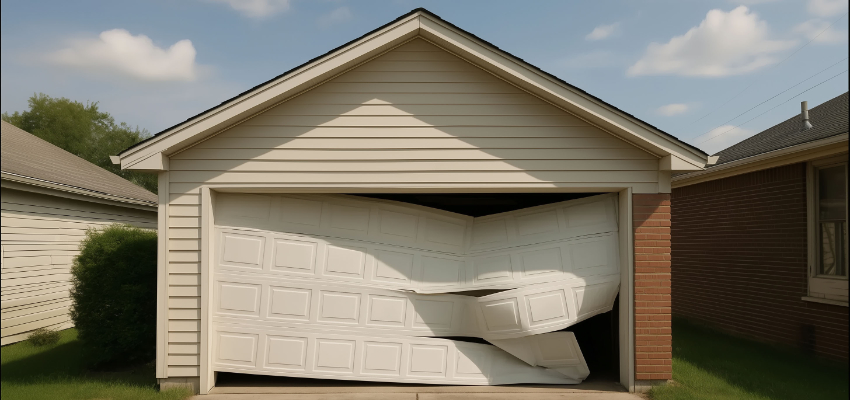
It happens faster than most people want to admit. Maybe you pulled in too far. Maybe you backed out before the door was fully open. Maybe the sun was in your eyes, the kids were yelling, or your brain was already at the next stop on the day’s schedule. Then comes the sound nobody wants to hear: crunch.
If you have hit your garage door hard enough to dent a panel, bend a track, or knock the door out of alignment, the next steps matter. Some damage is mostly cosmetic. Some damage turns a garage door into a serious safety hazard. The goal is to stay calm, avoid making it worse, and figure out whether you are looking at a repair, a partial rebuild, or a full replacement.
Hit your garage door with your car?
Step away from the opener, check for obvious hazards, and call a pro before forcing the door.Request a Damage Inspection
First: Stop and Do Not Try to “Power Through It”
A lot of homeowners make the same mistake right after impact: they hit the wall button or remote to see whether the door still works.
Do not do that.
A garage door system is designed to move in a very specific path with balanced spring tension, straight tracks, and evenly supported sections. If a car impact has bent a panel, twisted a hinge, shifted a track, or jammed a roller, running the opener can multiply the damage in seconds. A door that might have needed one panel repair can quickly become a track, roller, hinge, and opener problem.
If the door is partially open, crooked, dragging, or visibly off-track, leave it alone until it has been inspected.

What to Check Right Away
Start with a simple visual assessment from a safe distance. You are not trying to diagnose every part of the system. You are trying to determine whether the door is safe to touch, safe to leave in place, or urgent enough to call for professional help immediately.
Look for:
- Dented or creased door panels
- Gaps between door sections
- Bent vertical or horizontal tracks
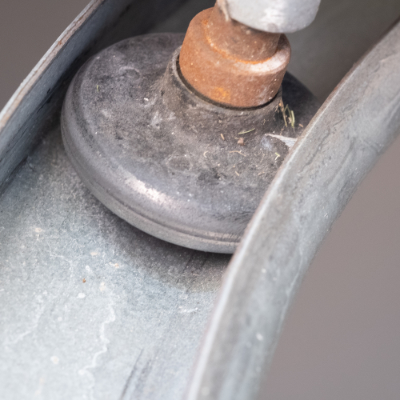
- Rollers that have popped out of the track
- Loose or broken hinges
- A crooked door that is hanging lower on one side
- Damage near the bottom section where the vehicle made contact
- Opener arm strain or a misaligned trolley
- Frayed cables or unusual spring tension
If you see broken springs or damaged lift cables, do not touch anything. Those components are under high tension and are not DIY-friendly repair items.
Cosmetic Dent or Real Structural Damage?
Not every car-to-door collision means you need a full new door. The type and location of the impact matter.
“If your garage door looks crooked, sags to one side, or won’t move smoothly after a bump, assume more than just the outer skin is damaged and have it inspected before use.” — Typical guidance from professional garage door technicians
When it may be mostly repairable
If the damage is limited to a small dent in one section and the door still sits square in the opening, the tracks remain straight, and the rollers stay engaged properly, a repair may be possible. Steel doors sometimes tolerate a modest hit better than people expect, especially if the impact was low-speed and centered on one panel.
When it is usually more than cosmetic
If the door is buckled, folded at a seam, dragging, jammed, or visibly shifted in the opening, that usually means the impact affected the structure of the door or the operating system. Modern sectional garage doors depend on all panels working together. A hard hit on one section can transfer force into hinges, brackets, track alignment, and opener settings.
In plain English: a dent is one thing. A door that no longer moves in a clean, balanced line is another.
Should You Try to Open or Close It Manually?
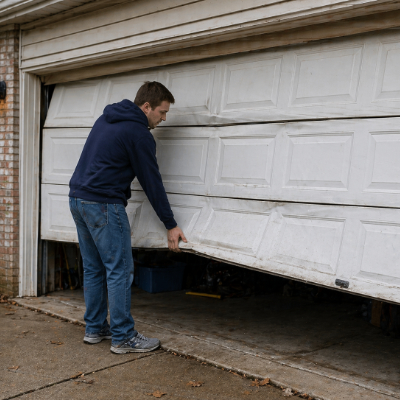
Only with caution, and only if it appears stable.
If your vehicle is trapped inside and the door is closed but only lightly damaged, you may be tempted to disconnect the opener and test the door manually. That can be reasonable in some situations, but only if the tracks are not bent, the rollers are seated, and the door is not binding.
Stop immediately if the door feels unusually heavy, sticks, twists, or drops unevenly. A properly functioning garage door should not feel like dead weight. If it does, the counterbalance system may be compromised.
If the door is open and damaged, the priority becomes preventing further movement and securing the opening. In that case, a professional inspection is the smarter move than experimenting.
Quick rule of thumb: if you are not sure whether it is safe to move, it is safer not to move it at all and call a technician to avoid a sudden drop or additional damage.
The Parts Most Commonly Damaged in a Car Impact
When a vehicle hits a garage door, the visible dent is often only part of the story. The most common collateral damage includes:
Bottom section and reinforcement
The lowest panel often takes the direct hit. That section also supports hardware and helps the door stay rigid during travel. If it is bent badly enough, the entire door can start tracking poorly.
Hinges and brackets
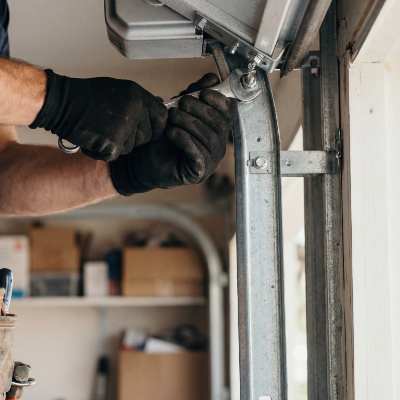
A sudden impact can bend hinges or pull hardware out of the panel skin, especially on older doors or thinner builder-grade models.
Tracks
Even a slight bend in the vertical track can cause rollers to catch, jump, or wear unevenly. Tracks do not need to look mangled to create major operational problems.
Rollers
A hit can knock rollers out of alignment or damage stems and bearings, especially if the door shifted sideways.
Opener arm and force settings
If the opener tried to move the damaged door, it may have strained the arm, trolley, or travel settings. That needs to be checked as part of the repair, not treated as a separate issue.
Repair vs. Replacement
This is usually the question homeowners care about most: can this be fixed, or am I buying a whole new door?
| Situation | Repair is More Likely When… | Replacement is More Likely When… |
|---|---|---|
| Extent of damage | Damage is limited to one panel or one localized area. | Multiple sections are bent or buckled. |
| Door age & model | The door model is still supported and matching sections are available. | The door is older and matching panels are unavailable. |
| Hardware condition | The tracks and major hardware are still true. | Tracks are twisted or mounting points are compromised. |
| Insulation | Insulated sections are intact and not crushed. | Insulated sections have been crushed or delaminated. |
| System alignment | The opener was not significantly affected and the door still tracks straight. | The impact affected overall door alignment and long-term reliability. |
Sometimes the deciding factor is not whether a repair is technically possible. It is whether the repair makes financial sense compared with installing a new, properly matched door system.
The Best Next Step
After a vehicle impact, the smartest move is a professional inspection by a garage door company that can evaluate the full system, not just the visible dent. That means checking the door sections, tracks, rollers, hinges, spring balance, and opener operation together so you know whether the door is safe, repairable, or better off replaced.
If you have damaged your garage door, call C & M Garage Doors. We can help assess the damage, explain whether repair or replacement makes the most sense, and provide a free quote to get your door back in safe working order.