Is Your Garage Ready for an EV? What Homeowners Should Know Before Installing a Charger
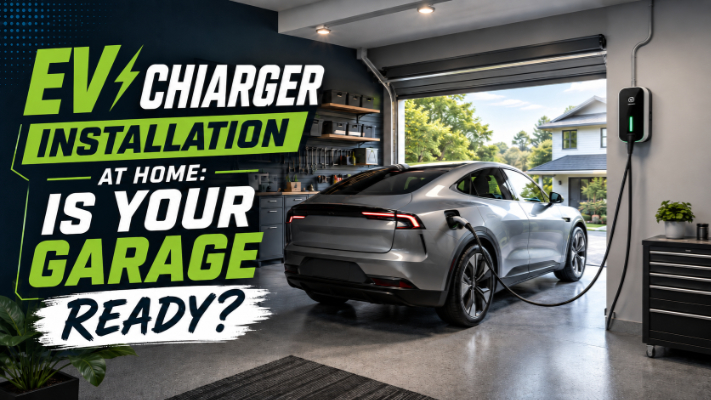
Buying an electric vehicle often raises a second question: is the garage ready for daily charging? The answer is not only electrical. A good setup has to work with the breaker panel, the vehicle's charge port, the garage door, the opener, stored items, and the charging cable.
Know What Kind of Charger You Are Planning For
Most homeowners are comparing Level 1 and Level 2 charging. Level 1 uses a standard household outlet and may work for light driving, but it is slow. Level 2 charging uses 240-volt power and is the common residential choice for faster overnight charging.
The U.S. Department of Energy describes Level 2 home charging as a 240-volt option for EV owners who want faster charging than a basic cordset.
Click Here to Learn MoreLevel 2 charging is going to require a well thought through and dedicated installation plan. The charger, breaker, wiring route, panel capacity, and physical location should be chosen together. A higher-output charger might not be the better solution if the existing electrical service is limited or the wall location creates clearance problems.
Electrical Load Comes First
Before choosing a charger location, an electrician should evaluate the home's available electrical capacity. EV charging can draw power for several hours, so it is not like adding a small convenience outlet. The National Electrical Code treats EV charging loads as continuous loads, which is why a formal load calculation matters before equipment is selected.
Do not rely only on open breaker spaces. A panel can have room for another breaker and still lack the service capacity to support a charger once heating, air conditioning, kitchen appliances, laundry equipment, and other major loads are considered.
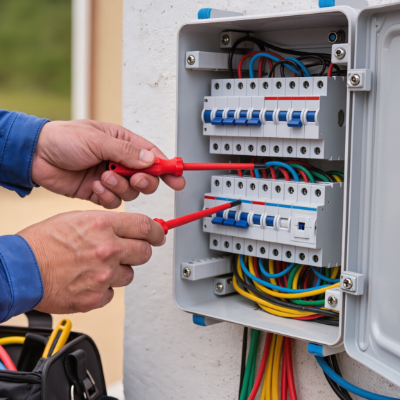
The garage door opener is usually not the largest load in the garage, but it should be part of the review. Openers, lighting, freezer circuits, shop tools, and garage refrigerators all affect how the space is powered. The charging circuit should not create nuisance trips or shared-load problems that interfere with reliable garage door operation.
Proper Panel Placement
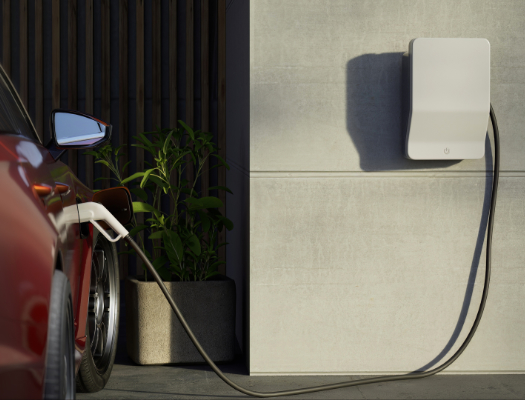
The distance between the electrical panel and the charger location affects installation cost, cable routing, and disruption. If the panel is already in the garage, the route may be simple. If it is in a basement, utility room, exterior meter area, or opposite side of the house, the electrician may need to route conduit through finished walls, attic space, crawlspace, or exterior surfaces.
The shortest electrical path is not always the best functional location. A charger near the panel may still be inconvenient if the vehicle's charge port is on the opposite side, the cord crosses a walkway, or the car must park too close to the garage door.
Keep Charging Cables Away From the Door System
Charging cables should not cross the path of the garage door, hang near torsion springs, rest against vertical tracks, or loop around opener hardware. The door system needs clear space for all it's moving parts.
Poor cord placement will just create avoidable problems. A cable near a garage door track can be pinched by moving hardware. A cord running across the floor becomes a tripping hazard, or a nuisance at best. A charging station placed near the garage opening is more prones to be accidentally hit by a vehicle, trash bins, bikes, or lawn equipment.
A better setup includes a wall-mounted cord holder and a cable path that reaches the charge port without entering the door's travel area. In a narrow garage, that may mean mounting the charger farther forward or backward than expected.
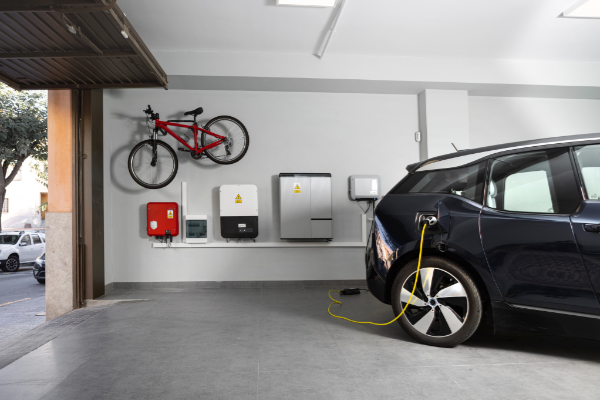
Check Door Clearance Before the Charger Goes In
This matters even more with larger EVs, trucks, and SUVs. A charger may technically fit on the wall but still be in the way when the vehicle door opens, mirrors fold, or someone walks between the car and the house entry. The charging handle should be easy to reach without forcing the cable across the vehicle, under the door, or through a high-traffic walkway.
You want to be able to still use your garage while your vehicle is charging. Consider all activities and walking paths while you're making your design plan.
Older Garages Deserve a Broader Readiness Check
Many garages were built long before EV charging became common. They may have limited outlets, older wiring, poor lighting, crowded storage, worn weather seals, or a garage door that already struggles in cold weather.
An EV charger does not require a perfect garage, but it does add daily use to the space. If the door reverses unexpectedly, leaves gaps, binds in the track, or has damaged sections, address those issues before the garage becomes a nightly charging station.
| Garage Area | What to Check Before EV Charging |
|---|---|
| Door & Tracks | Binding, noisy travel, damaged sections, or misaligned tracks that could worsen with daily use. |
| Weather Seals | Gaps at the sides or bottom that let in dust, cold air, or moisture near the charger and cord. |
| Lighting | Sufficient light to see the cord, handle, and walking paths while plugging in at night. |
| Storage & Clutter | Boxes, bikes, and yard tools stored away from the charger and cable path. |
Permits and Professional Installation Are Important
Because Level 2 charger installations commonly involve 240-volt circuits, homeowners should confirm permit and inspection requirements before work begins. Colorado homeowners can start with the state's electrical permit resources, but final requirements may depend on the local building department and authority having jurisdiction.
The electrician's job is to evaluate capacity, breaker size, wiring, grounding, charger specifications, and code compliance. A garage door professional looks at a different part of the same space: door movement, opener reliability, track clearance, weather sealing, and whether the charging setup will interfere with daily garage use.
Bottom Line
A garage can have enough electrical capacity for an EV charger and still be poorly arranged for real-world charging. The best installations account for all the things we just laid out in this article. Have any additional questions about your garage door system in relation to your new EV setup? Give us a call, any time (OK, actually just during business hours).
"A safe, convenient EV setup depends on both a code-compliant electrical installation and a garage door system with clear, unobstructed movement."