
Why Your Garage Is So Hot in Summer and What the Door Has to Do With It
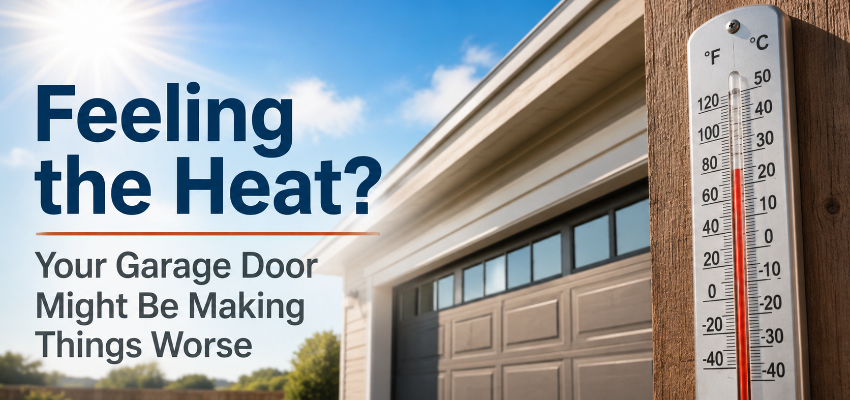
Walk into an unconditioned garage on a sunny summer afternoon, especially one this summer, and it can feel dramatically hotter than the rest of the house. That is not simply because garages get hot. A garage accumulates heat through several paths, and the garage door can be one of the most important.
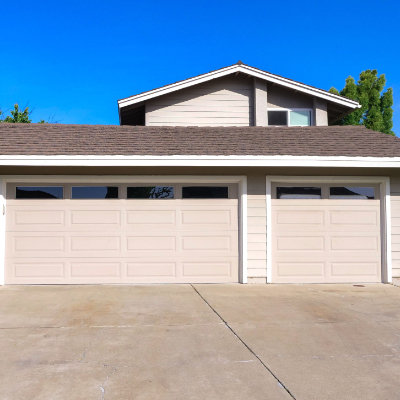
Unlike a typical exterior wall, a garage door is a large moving surface with panel joints, perimeter seals, a bottom seal, and often windows. Its construction, color, insulation, orientation, and condition all affect how much outdoor heat reaches the garage.
The Garage Door Can Act Like a Giant Heat Collector
When direct sunlight hits the exterior of a garage door, the surface absorbs solar energy and warms up. Some of that heat then moves through the door toward the garage interior. Darker finishes and doors that receive strong afternoon sun can make this effect especially noticeable.
The amount of heat that passes through the door depends heavily on its construction. A basic non-insulated steel door provides relatively little resistance to heat flow. An insulated door adds material between the exterior and interior skins to slow that transfer.
The U.S. Department of Energy explains that an insulation material's R-value measures its resistance to conductive heat flow, with higher R-values indicating greater resistance. That makes R-value useful when comparing insulated garage doors, although door construction, joints, windows, and installation quality also influence real-world performance.
If you want a deeper breakdown of insulation materials and door options, C & M Garage Doors has a separate guide to garage door insulation types and benefits.
Air Leakage Can Defeat an Otherwise Good Door
Heat does not enter only through the door panels. Hot outdoor air can also move through gaps around the opening.
Pay attention to:
- Cracked or flattened bottom seals
- Gaps along the side or top weatherstripping
- Light visible around a closed door
- Sections that no longer sit evenly against the opening
- Damaged panels or hardware that prevent a tight close
Weatherstripping is a standard way to reduce air leakage around moving components such as doors. In a garage, worn seals can allow a steady exchange of hot outdoor air even when the door itself is insulated.
This is why replacing an old seal can sometimes improve garage comfort more than simply adding insulation to a poorly fitting door.
Windows Trade Thermal Performance for Light
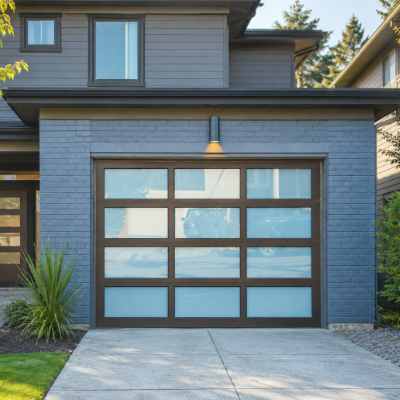
Garage door windows can improve appearance and bring natural light into the space, but they also change the thermal characteristics of the door.
Glass exposed to direct sun can add heat through solar gain, and a window section will not necessarily provide the same insulating performance as a solid insulated panel. The actual impact depends on the glass type, coatings, number of panes, frame construction, and how much of the door is glazed.
For a garage that faces west or south it will usually receive an intense afternoon sun and window configuration is worth considering when choosing a replacement door.
An Attached Garage Can Affect the Rooms Around It
The garage itself may not be air-conditioned, but that does not mean its temperature is irrelevant to the rest of the home.
If conditioned rooms share walls or a ceiling with a hot garage, heat can move through those assemblies. Building-science guidance from the Department of Energy explains that heat moves through a building envelope by conduction, convection, and radiation, while insulation and air barriers help reduce unwanted heat flow.
That means an insulated, well-sealed garage door is only one part of the solution. If the garage ceiling, shared walls, attic area, or door into the house is poorly insulated or sealed, those areas may also need attention.
Worried Your Garage Door Is Letting in Too Much Heat?
Schedule a quick inspection with C & M Garage Doors. We can check seals, alignment, and insulation and recommend cost-effective upgrades before the peak of summer heat.Request a Garage Door Checkup
Opening the Door to Cool the Garage Can Backfire
On a mild evening, opening the garage door can help release accumulated heat. During the hottest part of the day, however, leaving the door open simply gives hot outdoor air an unrestricted path inside.
It also exposes the garage interior to direct sunlight and can create security concerns. We covered several broader warm-weather issues back in 2023 in our guide to common summer garage problems and solutions.
For daytime heat control reducing heat gain is generally more useful than trying to ventilate with hotter outside air.
What Actually Helps Keep a Garage Cooler?
Start with the door because it is easy to inspect.
The Door Is Not the Only Cause, but It Is a Major Piece of the Puzzle
A hot garage is usually the result of several factors working together: direct sun, outdoor air leakage, insufficient insulation, roof and wall heat gain, and limited ventilation. The garage door matters because it combines a large exterior surface with multiple joints and seals that must continue to perform after years of daily operation.
If your garage is consistently uncomfortable in summer, C & M Garage Doors can inspect the existing door, weather seals, fit, and insulation and help determine whether maintenance, sealing improvements, or a more thermally efficient replacement makes sense for the space.
Ready to Tackle Summer Garage Heat?
C & M Garage Doors can help you pinpoint whether worn seals, door construction, or other envelope issues are driving up temperatures—and recommend options that fit your home and budget.Schedule a Garage Door Evaluation